We’re on a nationwide search to uncover the best and worst packaging in Australia.
Packaging is everywhere, but not all packaging is created equal. Some packaging protects products efficiently and is designed for reuse. Others are over the top, excessive, unable to be recycled, or just downright wasteful.
Across late 2025 and early 2026, we invited people from across the country to share examples of packaging – the good, the bad, and the unnecessary. Hundreds of nominations were assessed by packaging, plastics, waste and pollution experts.
Now, for the first time, we’ve crowned the worst and best packaging in Australia.
Overall Winners
Australia’s Worst Packaging
The Unpackit Award for Australia’s Worst Packaging is awarded to fill-on-site plastic cans that are being pushed as the next trendy cup at cafés across the country.
This award was hotly contended, with no shortage of problematic packaging being pushed into every corner of our lives. In the end, the award went to these cans because they represent everything that’s problematic with packaging in Australia. They’re single-use and built for on-the-go consumption, making them high-risk for littering. They combine plastic and metal in a way that makes them unrecyclable and are also excluded from container deposit schemes, meaning there’s nowhere obvious to put them when you’re done and no financial incentive to return them.
What’s worse, these cans are often replacing existing reusable glasses and cups. One nominator watched a café hand them out to dine-in customers sitting at a table, with a glass of water in front of them, while also refusing to serve the coffee in a reusable cup. Their nomination called out sealed cans for being “unnecessary, hard to recycle, and seemingly trying to make single-use cool”. They also noted the café “refused to serve me a coffee in a reusable cup for dine-in”.
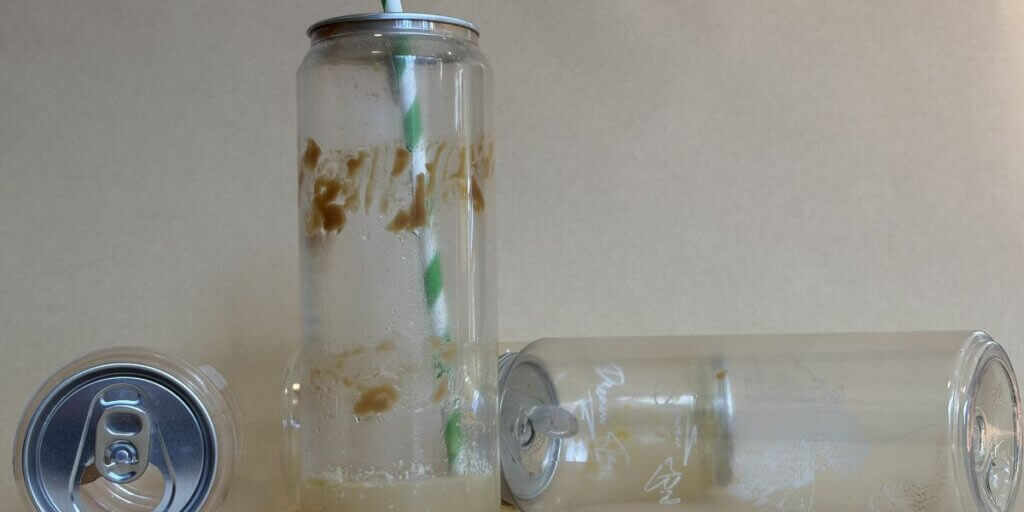
Another nominator noted the cans have “No disposal instructions, [are] unrecyclable due to mixed materials (PET plastic, aluminium), [and are] not eligible for 10c refund”.
Western Australia has already banned fill-on-site plastic cans and others may follow. But state-by-state bans will always be one step behind the next trend, playing endless whack-a-mole against a rising tide of plastic overproduction. A new problematic product can launch, scale and embed itself across thousands of venues, just like sealed cans have done. This is exactly the gap that national packaging laws must close. The Australian Government committed to developing mandatory national packaging laws in 2022. These standards – which must set baseline rules about what can and can’t be put into a single-use format – are still not in place.
“Mixed-material packaging contaminates every stream it touches in our yellow bins and ends up as waste anyway. To genuinely reduce waste and improve resource efficiency, packaging must prioritise material reduction, maximise reuse, and be designed for recyclability so recycling can operate as a true remanufacturing supply chain.”
– Suzanne Toumbourou, CEO, Australian Council of Recycling (ACOR)
Feedback from the expert panel:
“Filled-onsite plastic ‘cans’ are a perfect example of packaging innovation heading in the wrong direction. They mimic the look of aluminium cans, but the combination of plastic and metal render them unrecyclable, are hence banned in some Australian jurisdictions and cause confusion for the community”.
– Belinda Chellingworth, Expert Panel
“Filled-on-site plastic cans somehow manage to combine the worst parts of single-use plastic and performative branding into one unnecessary package. In 2026, packaging should solve problems, not indulge in ‘greenwash cosplay’ while sending more disposable plastic into the world.”
– Murray Richards, Expert Panel
“Most consumers would be extremely disappointed to know that this container is not recyclable. It doesn’t meet consumer and government expectations that all packaging in today’s market must be designed for reuse or recycling.”
– Helen Lewis, Expert Panel
“Packaging design that doesn’t have the end in mind is such an outdated mindset – this represents a massive lineal step backwards”
– Jenny Campbell, Expert Panel
Australia’s Best Packaging
The Unpackit Award for Australia’s Best Packaging is awarded to The Udder Way, a Tasmanian business that eliminates single-use plastic milk bottles by running a reusable milk keg system.
Every morning, at tens of thousands of cafes across the country, a scene plays out that we’re all too familiar with. A barista opens a fresh bottle of milk, pours it into a jug, and chucks the now empty plastic bottle into the bin. Then they do it again… and again, and again, and again, and again, and again. A busy café can easily go through thirty plastic milk bottles before lunch. Our favourite cafes all look different but, at the end of the day, their bins look the same. Australia uses over 500 million single-use plastic milk bottles every year. We’ve lived like this for decades, but why?
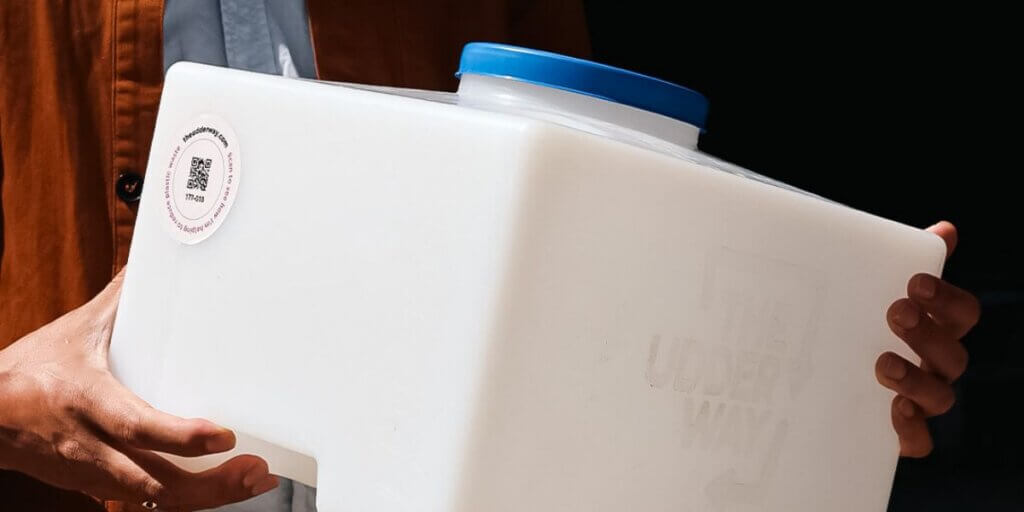
A Tasmanian café owner looked at the pile of plastic milk bottles in his bins and ended up with one of those ideas that makes you wonder why everyone isn’t doing it already. The Udder Way delivers 18-litre reusable kegs, designed to be roughly the size of a standard milk crate so they fit into existing delivery trucks and cool rooms. A keg is stored in the cool room, gets connected to a tap, and dispenses milk. When it’s empty, it works just like a keg in the pub. It goes back, gets cleaned, gets refilled and gets returned.
It isn’t just for cafés either. Anywhere that milk goes in volume, like schools, supermarkets, hospitals and work sites, can make the switch. It’s also available in grocery stores so households can use refillable milk bottles and ditch the single-use plastic.
One nominator put it plainly: “Refillable milk is a no-brainer! It avoids plastic use and the bulk containers look easy to transport with minimal empty space. I wish it was more mainstream”.
The kegs are manufactured in-house in a solar-powered warehouse using Australia’s first electric rotational moulding oven to reduce energy usage. Even the pallets its kegs travel on are wrapped in reusable pallet wrap. This is not a company that solved one problem and called it a day.
Nine two-litre plastic milk bottles are saved every single time one of the kegs gets reused. Since its launch, The Udder Way’s data estimates over 4.5 million single-use plastic milk bottles have been replaced with its reusable kegs, avoiding more than 246,000 kilograms of plastic waste. Best of all, this simple solution is scalable. They’re on track to avoid another 1.7 million milk bottles in 2026.
The less plastic that gets produced, the less plastic ends up polluting our environment. The Udder Way’s solution turns down the plastic tap by turning on the milk tap. Now we need strong national packaging laws so innovative Australian reuse businesses like The Udder Way can thrive and scale.
Feedback from the expert panel:
“The Udder Way delivers a rare double win, reducing packaging waste across both the B2B supply chain and in the B2C market – all to customers’ homes. Designing a holistic reuse system that works for businesses and customers is no small feat, which is what makes this model so impressive.”
– Belinda Chellingworth, Expert Panel
“The Udder Way has taken one of Australia’s most everyday products and completely rethought the system around it. Smart, practical and genuinely behaviour-changing, this is a packaging and system redesign that doesn’t just look sustainable, it works for the real world.”
– Murray Richards, Expert Panel
“This is a great example of packaging innovation that delivers both environmental benefits – through bulk delivery, reuse and recycling – and efficiency improvements for its business customers.”
– Helen Lewis, Expert Panel
“It is completely normal to supply beer in reusable kegs. The Udder Way is showing industry leadership supplying milk in bulk reusable containers. With so many benefits, soon we’ll wonder why we did it any differently”.
– Jenny Campbell, Expert Panel
Other Unpackit Awards
Problematic Packaging
The Castaway Unpackit Award goes to Mentos and the company behind it, Perfetti Van Melle, for their individually wrapped mints. Individually wrapped Mentos mints are becoming an all-too-familiar feature of Australia’s footpaths, gutters and environment. One nominator said they “often find plastic Mentos wrappers as litter in my neighbourhood and at the beach”.
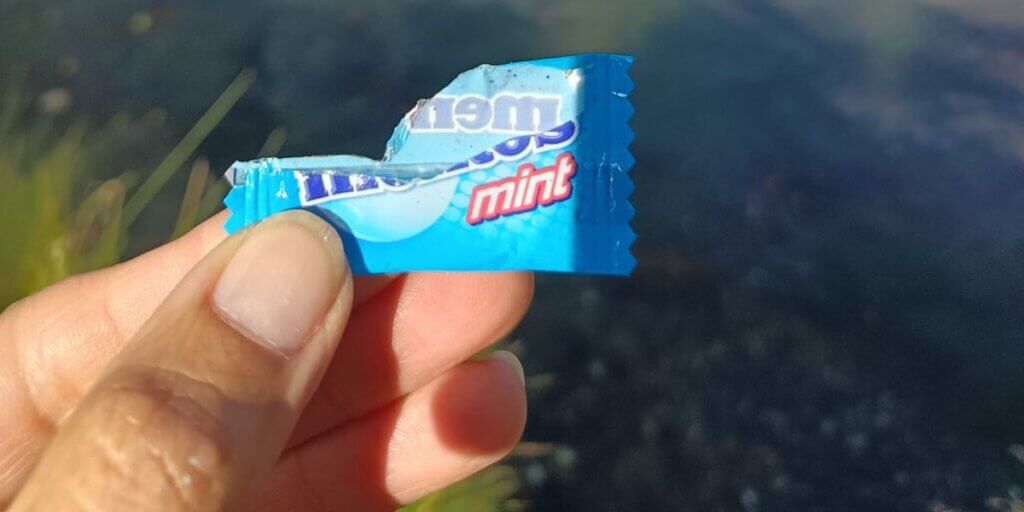
They’re one of the most ubiquitous pieces of plastic pollution across Australia, despite being entirely unnecessary.
The wrappers are soft plastic, lightweight, and handed out in exactly the settings where on-the-go littering is most likely – places like restaurant counters, hotel lobbies and conference tables. Customers unwrap them as they walk out the door and, before you know it, the tiny wrapper is gone. Into a pocket that gets turned out later. Onto a table it gets left behind on. Into the air and down the drain. It’s making Australia’s environment pay the price for a bit of extra branding.
Australia has no national packaging laws requiring companies like Perfetti Van Melle to take responsibility for where their packaging ends up. It’s no surprise then that soft plastics, including food wrappers, are the most commonly collected litter item in Australia. Strong national packaging laws should ban single-use plastic packaging that is re-wrapped in more plastic, and take us back to the solutions that worked for generations – a bowl and some tongs, with no wrapper required.
Feedback from the expert panel:
“I’ve lost count of how many of these I’ve picked up in parks … roadsides – and it’s not uncommon for a collection of these to rain out of my wetsuit after a surf. They’re a reminder that the smallest pieces of packaging are often the hardest to recover once they enter the environment.”
– Belinda Chellingworth, Expert Panel
“An outdated approach to convenience packaging, where excessive material use is normalised for the next generation. At a time when smarter, lower-waste alternatives are readily available, this format is disastrous from both a sustainability and design perspective.”
– Packaging design expert, Expert Panel
The Nature Had It Covered Unpackit Award goes to ALDI, Coles and Woolworths for wrapping avocados in unnecessary plastic netting that can shed microplastics. Nature already wraps avocados in their own perfectly functional skin. Yet the big supermarkets are wrapping avocados in unnecessary plastic netting that can scatter microplastics when opened. The tiny microplastics end up going down the drain and into our waterways where they’re impossibly small to recover.
Too often, Australians are left without a choice to avoid the unnecessary plastic on their groceries. One nominator said “I hate myself for buying produce in net bags but often there is no choice, so I do”.
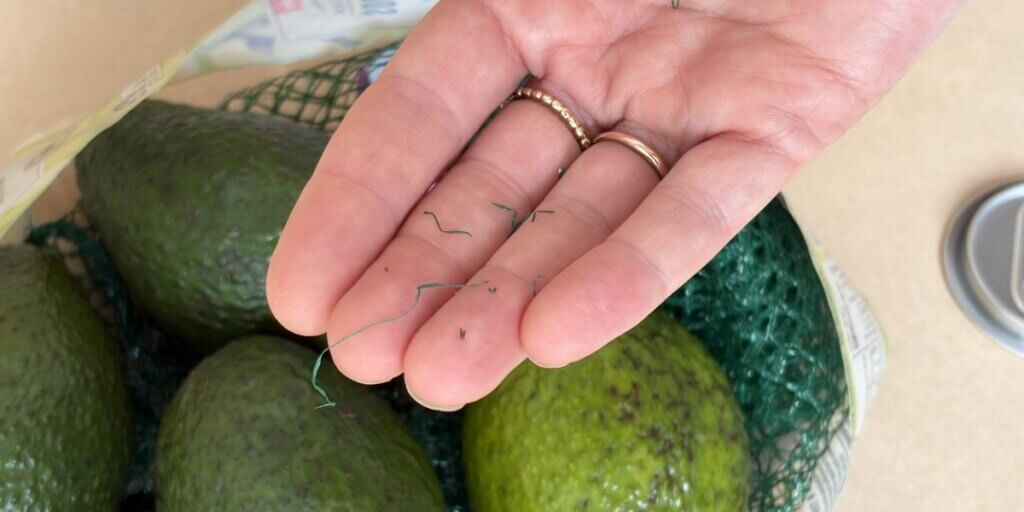
Plastic-wrapped avocados are just one part of a bigger problem of plastic flooding into supermarket shelves. Over recent years, products that had always been sold loose and unpackaged have been quietly wrapped up in more and more unnecessary packaging. Almost half of all nominations received by the Unpackit Awards this year were for products sold on supermarket shelves. That is not a coincidence, that is a pattern.
The fix is not complicated. Sell it loose, the way it grew. But because Australia doesn’t have national packaging laws, there’s nothing preventing the big supermarkets from continuing to wrap groceries like avocados in unnecessary packaging. National packaging laws, if implemented, could include design standards that require packaging to serve a functional purpose that the product cannot already serve itself.
Feedback from the expert panel:
“This Award reflects the most common packaging frustration I hear – entirely unnecessary and avoidable plastic when nature already provided the perfect protection.”
– Belinda Chellingworth, Expert Panel
“Congratulations to ALDI, Coles and Woolworths for continuing to package avocados in microplastic-shedding netting despite the product already coming with a highly effective and free natural protective layer: its own skin.”
– Packaging design expert, Expert Panel
The Iceberg Unpackit Award goes to Kmart for its Anko Dumbbell Set that hides ludicrously unnecessary plastic packaging beneath the surface of a weights carry case.
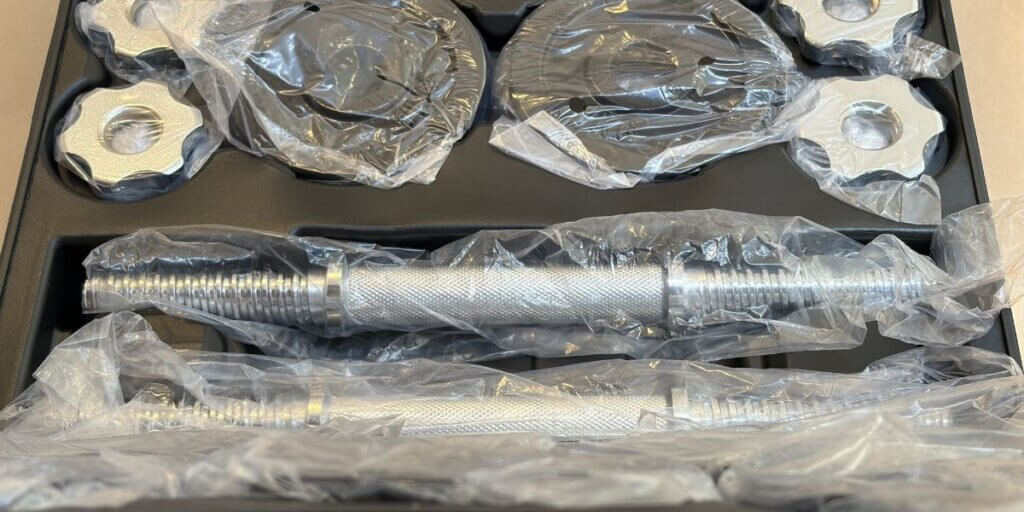
Kmart’s Anko product line is one of the most purchased in Australia. The Kmart Anko Dumbbell Set comes in a hard protective plastic case. Open the case and you’ll find every individual weight plate wrapped in its own plastic bag. Hidden soft plastic bags to ‘protect’ heavy, durable weights. One nominator asked: “Why do weights, of all things, need to be protected in plastic bags?… Who told the manufacturers that this is what Aussies want?”.
There is currently no legal limit on how much packaging a product can include, no requirement for packaging to serve a functional purpose, and no requirement to disclose hidden packaging that many Australians would want to avoid. Until we have strong national packaging laws, plastic will keep piling up where no one can see it.
Feedback from the expert panel:
“Nobody enjoys a not-so-happy surprise when they open a product and find unnecessary packaging hidden inside. Packaging should use only what is needed to protect the product, not generate excessive waste for the community to be left with.”
– Belinda Chellingworth, Expert Panel
“An example of how unnecessary packaging is often hidden below the surface, where consumers only discover the true scale of waste after purchase. It highlights the need for greater accountability not just for what packaging looks like on shelf, but for the total material footprint created throughout the entire unboxing experience.”
– Packaging design expert, Expert Panel
Good Packaging
The Blue Whale Unpackit Award goes to Bearhug for reducing one of the biggest, yet elusive, sources of unnecessary packaging with its reusable pallet wrap system.
Bearhug is doing the hard work where no one is watching. It was founded by a Sydney truck driver who watched every pallet of goods being wrapped in single-use plastic stretch film. While the pallets themselves are usually reused, the plastic wrap then gets cut off and goes in the bin. In just about every supply chain across the country, this plastic accumulates invisibly out the back of warehouses.
Each of Bearhug’s reusable pallet wraps lasts 1,000 uses and displaces 350 kilograms of single-use plastic over its lifetime. It is faster, stronger, and cheaper per use than what it replaces. It is already in use across 140+ businesses and is now launching in Europe.
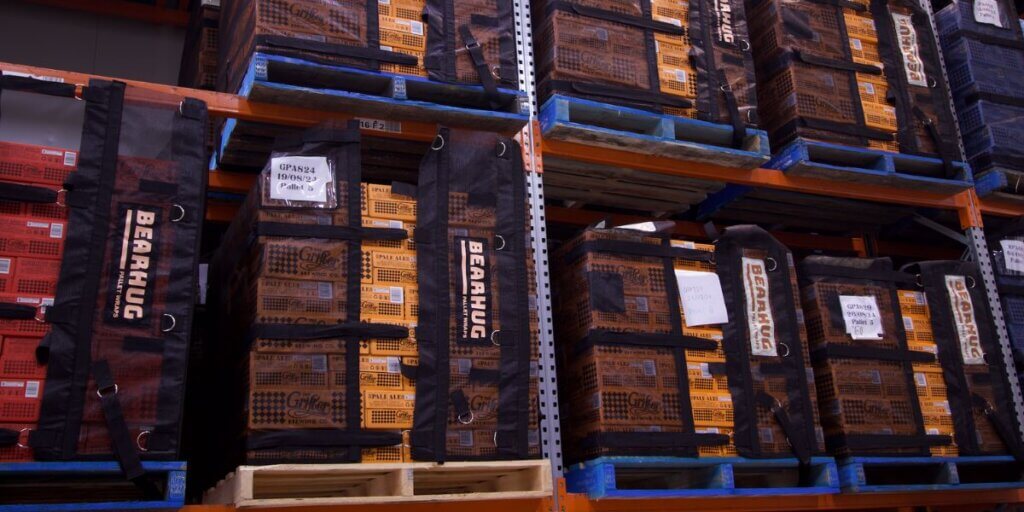
The Australian-led solutions to unnecessary packaging are here, but they need new national packaging laws to even the playing field. Australia’s promised reforms to national packaging laws must extend producer responsibility into supply chains.
Feedback from the expert panel:
“Bearhug is tackling one of the hardest challenges in packaging – creating reuse systems in a world designed to be linear. This solution works hard in the largely unseen world behind the products, food and drink we enjoy.”
– Belinda Chellingworth, Expert Panel
“Tackling the less glamorous side of packaging innovation, Bearhug has focused on the harder work of reducing waste through practical system design and material accountability behind the scenes. Congratulations for addressing large-scale packaging waste that consumers rarely see, but which have significant environmental impact at scale.”
– Packaging design expert, Expert Panel
“Bearhug is an innovative solution to a significant plastic waste problem, with over 100,000 tonnes of plastic wrap used each year in Australia. It uses a business model that already works successfully for reusable timber pallets and simply extends it to pallet wrap.”
– Helen Lewis, Expert Panel
The Hermit Crab Unpackit Award goes to Cercle for making reuse the default, not the exception, for the fuel that really powers Australia – our humble coffee.
A hermit crab doesn’t make its shell – it finds one, uses it, and when the time comes, passes it on for another hermit crab to use. That’s exactly what Cercle had in mind.
Australians drink over one billion takeaway coffees a year. Almost every cup is single-use, consisting of plastic-lined paper that gets used for mere minutes and then binned.
Cercle cups sit at the café counter alongside regular cups. You order, drink, and drop the cup into a nearby pod. Cercle collects, washes, and returns them. The cup says it all: Drink it. Drop it. Do it again.
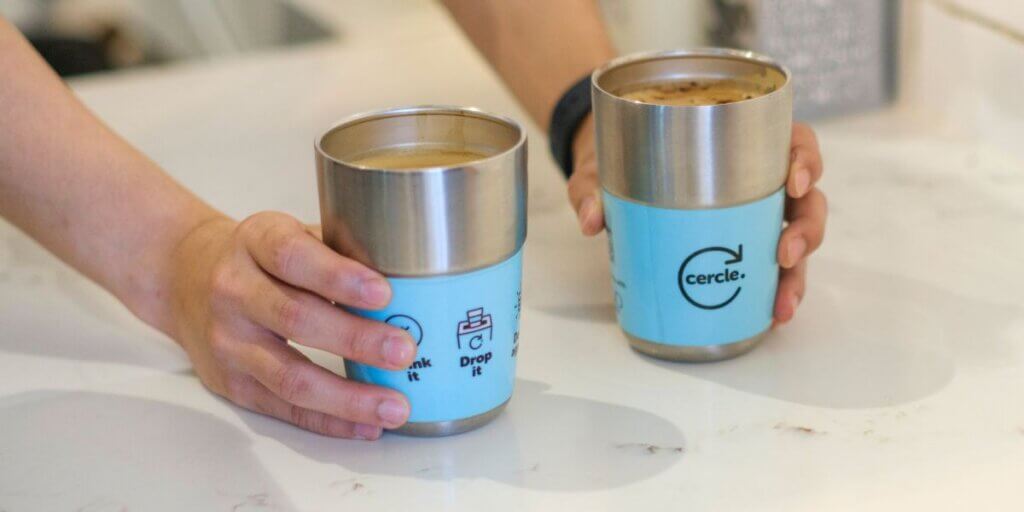
Each stainless steel cup is built to last 10,000 uses. Since its launch, Cercle’s data estimates over 1.5 million single-use items have been avoided thanks to its reusable cups, saving our landfills and environment from 39.5 tonnes of unnecessary waste.
Cercle has built a reuse system that works, but scaling up relies on gradual voluntary uptake. We need national packaging laws to mandate that venues offer reusable options where a proven solution exists, so that Australian reuse systems like Cercle’s can replace single-use packaging in more venues and new areas.
Feedback from the expert panel:
“So many of society’s waste issues and burdens are placed on the community to solve. But even the most devoted reusable cup user will forget … be travelling … take a different bag … we’re all human! Providing a reuse system, where the café, property manager and local businesses also play their part, removes friction for customers, and embeds responsibility across all responsible parties.”
– Belinda Chellingworth, Expert Panel
“By designing packaging and logistics together, Cercle has helped shift reuse from a niche sustainability concept to a scalable business model. Importantly, the system succeeds not just because consumers can participate, but because the experience has been designed to make participation convenient and commercially viable.”
– Packaging design expert, Expert Panel
“Australians use over a billion single-use coffee cups each year. Cercle is a great example of a well-designed reuse system that eliminates unnecessary waste.”
– Helen Lewis, Expert Panel
Why it matters
- Packaging is a huge contributor to pollution in Australia, making up a staggering 60% of litter that’s collected.
- Replacing single-use packaging with reusable alternatives can reduce packaging-related emissions by up to 90%.
- The overproduction of plastic is one of the greatest threats to our coasts and ocean – plastics entangle, starve, smother and poison marine life and harm their habitats.
- Too many businesses, brands and retailers are still locked into single-use, throwaway solutions, when we urgently need to shift to reuse, reduction and smarter design.
If you would like any more information about the awards, please refer to our FAQs.